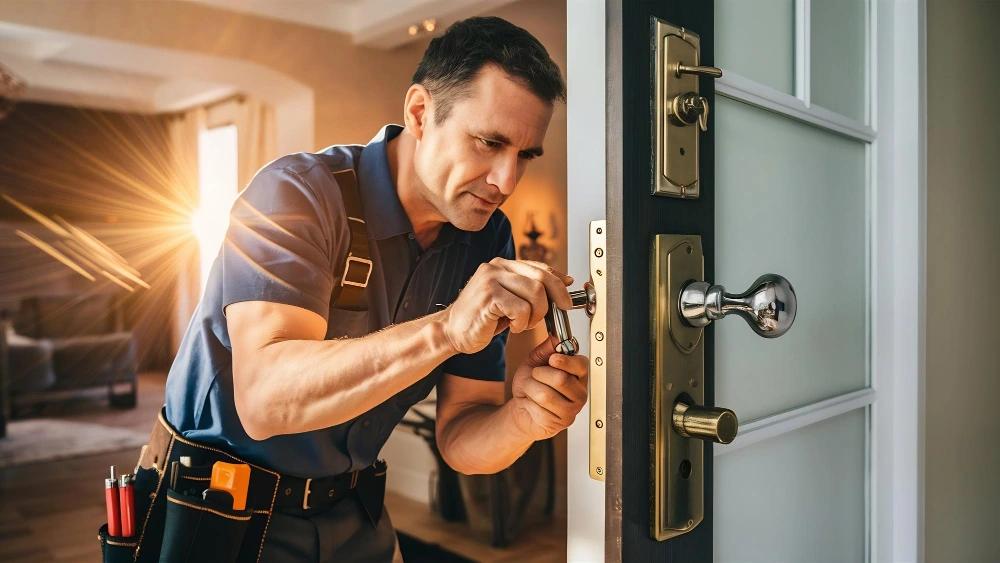
Your front door is one of the most important parts of your home security. It is also one of the easiest places to find small weaknesses: a lock that no longer turns smoothly, a door that does not close tightly, poor visibility around the entrance, or keys that have been copied too many times.
This checklist covers practical improvements for UK homes, flats and rented properties. It focuses on prevention and safe checks. If a lock is damaged, jammed or unsafe, avoid forcing it and arrange a professional inspection.
Open and close the door several times. It should close into the frame without lifting, slamming or excessive pressure. When locked, the handle and key should operate smoothly.
If you have to pull the door tightly, push it upwards or repeatedly turn the key before the lock engages, the door may be misaligned. Continuing to force it can damage the key, cylinder or multipoint mechanism.
Check for loose screws, visible damage, rust, or a cylinder that moves when the key is turned. On uPVC and composite doors, inspect the handles and the multipoint locking strip for movement or unusual noise.
Do not remove a lock just to inspect it if you are not confident you can refit it correctly. A poorly fitted replacement can leave the door less secure than before.
Only give keys to people who genuinely need them. Avoid leaving a spare key in an obvious hiding place near the door, such as under a plant pot or doormat.
If keys are lost, stolen or unaccounted for after moving home, treat the lock as potentially compromised. Changing the lock or rekeying it is usually more predictable than hoping the key will not be found.
A well-lit entrance makes it easier to identify visitors and reduces hiding places. Keep shrubs, bins and other objects from blocking the view of the door or creating cover close to windows.
For flats, make sure the communal entrance closes properly behind you. Never hold a controlled entrance open for an unknown visitor.
The lock can only work as well as the frame around it. Look for splitting timber, loose hinge screws, gaps around the frame or signs that the door has dropped.
If the frame is damaged, fitting a stronger lock alone may not solve the problem. The frame, keeps and locking points should work together.
Do not label spare keys with your full address. If you use a smart lock, keypad or intercom code, change default codes and remove access for people who no longer need it.
Smart technology can be convenient, but it still needs a secure door, a charged battery and a backup plan for access. Keep recovery information private and use a strong, unique password for the associated account.
When you move into a new property, you do not know how many previous occupants, contractors or visitors may have had keys. Add a lock check to your moving-day list, along with smoke alarms, windows and external doors.
Renters should ask the landlord or letting agent before making permanent changes. GOV.UK guidance and local housing advice can help with tenancy-specific questions; a locksmith can explain the practical options for the existing door without assuming that a full replacement is needed.
Stop and get help if:
Forcing the key or drilling into the lock can turn a minor repair into a larger one. If you are locked out, see our emergency locksmith service. For a planned replacement, see our lock change service.
Good front door security is usually a combination of a sound door, a correctly fitted lock, controlled access and simple daily habits. Start with the checks above. If something feels wrong, deal with it before the problem becomes an emergency.
Security advice only makes sense when it matches the door. Timber, composite, aluminium and uPVC doors use different combinations of locks, frames and hinges. A timber door may have a mortice lock and night latch, while a uPVC or composite door commonly uses a euro cylinder connected to a multipoint mechanism.
Look at how the door operates rather than relying on its colour or finish. Does the handle need to be lifted before the key turns? Are several hooks or rollers visible along the edge? Is there a separate night latch? Record these details before buying hardware or asking for a quotation.
If you are unsure, a locksmith can identify the system without immediately replacing it. This matters because a premium cylinder cannot correct a damaged frame, and an additional bolt may be unsuitable for a particular door or tenancy.
A front door is a system. The leaf, frame, hinges, glass, letterbox, handles and locking points all affect security. Concentrating on one shiny component can hide a weakness elsewhere.
Stand inside and inspect the full perimeter. The gaps should look reasonably even, the door should not scrape the floor and the frame should not move when normal pressure is applied. Check that glazing panels are secure and that somebody cannot easily reach keys or a thumbturn through the letterbox or nearby glass.
Do not attempt destructive tests. The aim is to notice wear, movement or easy access, not to recreate a break-in.
Timber can swell, shrink or split as conditions change. Check the frame around the lock and hinges for cracks, loose screws or previous repair damage. The door should sit squarely and close without needing a shoulder or hard pull.
If the door has more than one lock, understand how each is meant to be used. A night latch may close automatically while a mortice lock requires the key. Household members should know the normal routine so the door is not left relying on only part of its security.
Paint can also build up around keeps and edges. Do not scrape or alter the frame simply because the door feels tight; first determine whether the problem is paint, moisture, hinge movement or the lock itself.
Many uPVC and composite doors use a multipoint system. Lifting the handle moves hooks, rollers or bolts into keeps around the frame, and turning the key secures the mechanism. If you must force the handle or pull the door into position, the system may be under strain.
Test gently with the door open and then closed. A mechanism that works open but not closed often points to alignment. Our guide to a uPVC door that is not locking properly explains the symptom checks in more detail.
Do not choose a cylinder or handle set only from a photograph. Dimensions, operation and compatibility matter, and a poorly matched part can make a good door unreliable.
Security measures should not prevent occupants from escaping quickly in an emergency. Be cautious with bars, chains, portable braces or extra bolts that could obstruct the normal exit route. Everyone in the household should understand how to open the door from inside.
If the door is part of a flat or managed building, fire-door rules and communal arrangements may limit alterations. Ask the landlord, freeholder or building manager before drilling or replacing hardware.
Lighting is most useful when it helps residents and neighbours see who is at the entrance. Position lights so that they illuminate faces and the approach without creating glare that makes a camera image useless. Replace failed bulbs and test motion sensors periodically.
Trim vegetation that completely hides the doorway, but do not publish photos or social posts that reveal detailed security arrangements. A clear line of sight is useful; advertising the exact position of every camera, spare key or blind spot is not.
For flats, report communal lights that remain broken. A secure private door is only one layer when stairwells, corridors and shared entrances are poorly maintained.
A video doorbell can help you identify visitors and review activity, but it is not a substitute for a sound door and lock. Check battery levels, notifications and account access. Remove old users when a housemate, tenant or contractor no longer needs access.
Use a strong, unique password and enable additional account security when the provider supports it. Keep firmware and apps updated. If a smart lock depends on a phone, battery or hub, decide how authorised occupants will enter during a power, network or device failure.
Choose technology for a clear reason: perhaps temporary access for a carer, a record of deliveries or easier key management. Convenience is valuable, but extra complexity also needs maintenance.
Keys left close to a letterbox or visible window can be easier to reach than residents expect. Store them in a consistent place away from external openings while keeping them accessible to occupants who may need to leave quickly.
Do not attach the full address to a keyring. When lending a key, record who has it and agree when it will be returned. Review spare keys after cleaners, builders, tenants or housemates finish their access.
If a key disappears and can be associated with the property, follow the steps in our lost house keys guide rather than waiting indefinitely for it to reappear.
Moving home is an obvious time to review locks, but it is not the only one. Check access after a separation, change of tenant, lost bag, building work, change of cleaner or carer, attempted break-in or repeated unexplained problems with the door.
A review does not always mean replacing everything. It means confirming who can enter, whether all keys are accounted for, whether the hardware still operates normally and whether permissions in smart systems are current.
Once a month, take two minutes to operate the door slowly and notice changes. Confirm that it closes without force, the handle returns normally, the key is not bending and the frame shows no new damage. Test any light, doorbell or camera and check that the entrance remains clear.
Seasonal checks are also useful. Weather can reveal a door that is already close to misalignment. Address a gradual change while the door still works instead of waiting until it cannot be locked at night.
Arrange an inspection when the door cannot be secured normally, the frame is damaged, the key is becoming difficult to turn, the handle grinds or droops, or you cannot account for important keys. You should also seek advice before purchasing expensive hardware if you are uncertain about the door type.
Ask what component is faulty, what repair is proposed and whether the existing door and frame are sound. A clear explanation should distinguish an urgent security problem from an optional upgrade.
Use the door and locks according to their intended operation and your household's safe-exit needs. The important points are that the entrance cannot be opened casually from outside and everyone inside can leave safely in an emergency.
No. Smart access may improve key management and convenience, but physical strength, correct installation, software maintenance and account security still matter. The door and frame remain part of the protection.
It is sensible to review access because you may not know how many keys exist. Whether the cylinder, lock or another component needs changing depends on the door and tenancy. Renters should agree permanent alterations with the landlord or agent.
Check the frame, keeps, hinges and how the door sits when locked. Movement can indicate alignment or hardware problems even when the key still turns.
Use a brief monthly check and a more deliberate review after moving, losing keys, building work, damage or any change in how the door operates.
The front door is not the whole security plan, but it is the best place to establish good habits: control access, repair small faults early, keep escape routes usable and avoid relying on one gadget. Once the entrance is sound, apply the same practical review to back doors, patio doors, accessible windows, garages and communal areas.
The strongest improvement is often not the most expensive one. It is the combination of a door that fits properly, compatible hardware, accounted-for keys and residents who notice when something changes.

Published by Team Locksmith
Editorial team
Published by the 24hrslocksmith editorial team and checked against our live service pages, pricing, and coverage.